

VECTRA® WB360 scan for skin cancer detection
AHN is committed to offering our patients the latest technological advancements that detect skin cancer earlier, so we can find and treat it earlier resulting in improved survival outcomes.
That’s why we are one of only 20 clinics in the United States and the only one in western Pennsylvania that has Canfield’s VECTRA® WB360 whole body imaging system. This groundbreaking technology allows our team to monitor the skin for new and concerning skin growths far beyond the abilities of a traditional skin exam or traditional body photography, which have been the gold standard for decades.
Whole body skin cancer screening
This technology integrates almost instantaneous whole body digital photography and digital interpretation of concerning skin growths and moles to assist your dermatologist in providing the best available care. At various AHN locations, there are handheld devices for doctors to assess particular skin lesions specifically. This allows quick assessment or results to see if the patient needs to be sent to the Melanoma and Skin Cancer Center of Excellence.
Benefits of detecting skin cancer early
When caught early, most skin cancers are highly treatable. Even in melanoma cases, the most aggressive form of skin cancer, there is a 97% survival rate when detected early. With VECTRA® WB360, AHN dermatologists have the ability to track small skin changes over time with regular screenings. Thus resulting in early diagnosis, more treatment options, and greater survival outcomes.
Having regular skin cancer screenings is vital to your health. The AHN Cancer Institute and VECTRA are two powerful tools at your disposal when you choose AHN for your skin cancer prevention and treatment. Learn more about this and other cutting-edge cancer treatment innovations near you.
How the VECTRA® WB360 detects skin cancer
The VECTRA® WB360 is a specialized imaging system used in dermatology to detect and monitor skin cancer. It captures high-resolution images of the skin surface, providing detailed information about skin lesions and moles and their characteristics. The system uses advanced technology to analyze these images, identifying potential signs of melanoma and other skin cancers. This information helps dermatologists make earlier and more accurate diagnoses and monitor the progress of treatment, ultimately improving patient outcomes.
AHN is the only health care system in western Pennsylvania to have this technology. And handheld dermatoscope devices are available throughout the AHN network at several of our primary care and oncology clinics to provide a vital extension of our skin cancer detection and management abilities.
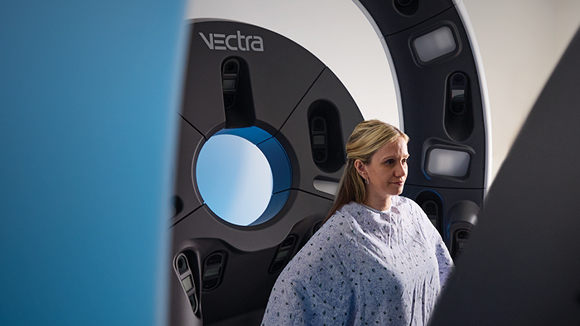
What to expect during your screening
Given it’s one of only 15 VECTRA® WB360 machines in use in the U.S., you probably have questions about what to expect at your screening. Rest assured, we are here to help you feel at ease and ready for your appointment. During the scan, you will be in a private room where you will need to remove your clothing, except underwear. This ensures the machine can get a full-body scan. The entire appointment usually takes between 20 – 30 minutes, but the device only takes a few minutes to obtain the images.
Images are encrypted and secure in our system where only Skin Cancer Center staff have access to review. Whole-body images are not stored in your chart. Focused lesion images that are being monitored will be stored, so your care team can monitor them during your treatment.
How to prepare
To get the most accurate images, here are some things you can do to prep for your screening:
- Avoid waxing or shaving (except the face, if you regularly shave) within a week of your appointment.
- Avoid laser hair removal for four weeks before your appointment.
- On the day of your appointment, ensure your skin is clean and free of any makeup or heavy, thick creams.
- Wear underwear with skin-toned or neutral colors without patterns. Minimal fabric is preferred so the machine can scan as much skin surface as possible, but feel free to wear whatever you are most comfortable in.
- Ensure your long hair is tied up and away from the face and neck.
- If you have thick body hair, we recommend clipping it so the camera can scan the body easily.
How to know if you have skin cancer
At-home monitoring of your skin for any changes or suspicious marks is important, but the only way to know you have skin cancer is to visit your primary care physician or dermatologist for screening and diagnosis. Early detection and treatment are crucial is treating and improving survival rates for aggressive skin cancers like melanoma. The VECTRA® WB360 Whole Body Imaging System can help your dermatologist identify and track precancerous or cancerous lesions and moles — leading to better outcomes.
It’s crucial to consult a health care professional for any concerns about your health, including skin cancer. We want to see you and answer any skin questions.
Here’s why it's important to see a doctor:
- Accurate diagnosis: Only a doctor can properly diagnose skin cancer through a physical examination, biopsies, and other tests.
- Treatment options: Early detection is key for successful treatment. A doctor can recommend the best course of action based on the type and stage of cancer.
- Prevention and monitoring: A doctor can provide guidance on skin cancer prevention, such as sun protection, and recommend regular skin checks.
Schedule an appointment with a dermatologist or your primary care physician if you notice any changes in your skin, such as:
- New moles or changes in existing moles: size, shape, color, or texture.
- Sores that don’t heal or that bleed easily.
- Patches of skin that are itchy, scaly, or crusty.
- Unusual growths or bumps on your skin.
The VECTRA WB-360 can help track changes on your skin over time and give a full body readout.
VECTRA WB360 scan FAQs
The VECTRA WB360 is a cutting-edge dermatological imaging system designed to provide comprehensive, high-resolution 3D photographs of nearly the entire body surface. This technology allows dermatologists to create a detailed baseline map of a patient's skin, which can then be used to track changes in moles and lesions over time with remarkable precision. It's a powerful tool for early detection and monitoring of skin cancer, particularly for individuals with numerous moles or a history of melanoma. Patients often have questions before the scan. We’re here to help answer those.
How long does a full body skin scan take?
A full body scan using the VECTRA WB360 system is remarkably efficient. The actual imaging process, where the patient stands in the machine while it captures the images, typically takes only a few minutes. You will be asked to stand in various positions to ensure comprehensive coverage. The entire appointment, including preparation (such as removing clothing and jewelry), the scan itself, and any brief post-scan instructions, generally takes about 10 to 20 minutes. The time a dermatologist spends reviewing these images with you will be separate from the scanning process.
How much does a scan cost?
The cost of a VECTRA WB360 scan can vary significantly and is dependent on several factors, including the clinic or facility offering the service, your insurance provider, and whether the scan is considered medically necessary or elective.
- Insurance coverage: Some insurance plans may cover the cost of a VECTRA WB360 scan, especially if you have a high risk for melanoma (e.g., many moles, a history of skin cancer, or a strong family history). However, many plans may consider it an out-of-pocket expense, as it's a newer, advanced technology.
- Provider fees: The pricing will also depend on the specific AHN facility or dermatology practice offering the service.
It is highly recommended to contact the AHN dermatology department directly where you plan to get the scan, as well as your insurance provider, to get the most accurate and up-to-date information on pricing and coverage.
How can you detect skin cancer early?
Early detection of skin cancer often involves regular self-examinations of your skin for any changes in moles or new lesions, as well as professional skin screenings by a dermatologist. The VECTRA WB360 3D Whole Body Imaging System aids in early detection by creating a detailed 3D map of a patient's skin surface, allowing dermatologists to track changes in moles and lesions over time with great precision, identifying even subtle alterations that might indicate early skin cancer.
How early can skin cancer be detected?
Skin cancer can be detected at its earliest stages, sometimes even before it becomes visible to the naked eye, through advanced imaging technologies like the VECTRA WB360. This system can capture high-resolution images of the entire skin surface, enabling doctors to identify suspicious lesions and monitor their evolution. Early detection is also possible through routine self-checks and professional examinations.
How early does skin cancer need to be detected?
Skin cancer needs to be detected as early as possible. The earlier skin cancer, especially melanoma, is detected and treated, the higher the chances of successful treatment and a positive outcome. Early detection can prevent the cancer from spreading to other parts of the body, which significantly complicates treatment.
What tests are done to detect skin cancer?
Tests done to detect skin cancer typically include visual examinations by a dermatologist, often augmented by advanced imaging. The VECTRA WB360 3D Whole Body Imaging System is a key tool in this process, creating a comprehensive 3D record of your skin. If a suspicious lesion is identified, a biopsy (where a small sample of the skin is removed for microscopic examination) is often performed to confirm the diagnosis.
Is there a full body scan to detect skin cancer?
Yes, there is a full body scan to detect skin cancer. The VECTRA WB360 3D Whole Body Imaging System is a cutting-edge technology that performs a "full body scan" in the sense that it captures a complete 3D image of nearly your entire skin surface in a single, rapid session. This system allows for comprehensive mapping and monitoring of all moles and lesions.
Can skin cancer be detected by a scan?
Yes, skin cancer can be detected by a scan, specifically through advanced imaging systems like the VECTRA WB360 3D Whole Body Imaging System. While these scans don't definitively diagnose cancer (a biopsy is usually required for that), they are highly effective at identifying suspicious lesions and monitoring changes that may indicate the presence or development of skin cancer, guiding dermatologists to areas that require closer examination.
What scans detect skin cancer?
The primary scan mentioned in the provided resources for detecting skin cancer is the VECTRA WB360 3D Whole Body Imaging System. This advanced imaging technology captures high-resolution 3D images of the entire skin surface, creating a baseline and allowing for precise tracking of moles and lesions over time to identify any changes indicative of skin cancer.
Contact us
To schedule an appointment with VECTRA® WB360 whole body imaging, you can schedule online or call the Hope Line at 412-578-HOPE 412-578-4673 to connect with a nurse navigator.
Book a screening
Screenings let us find cancer early when it’s most treatable. Schedule a skin cancer screening near you during a weekday or during a Saturday screening time.
Second opinions
If you have cancer, you have a team of oncology specialists ready to review your medical records and offer you a second opinion. After completing their review, they’ll talk with you about your goals to determine a course of treatment that’s right for you. To get started, fill out our Second Opinion Request form. A nurse navigator will contact you within the next 24 to 48 hours to discuss next steps and schedule.
-
Appointments
Cancer Institute412-578-HOPE