


Living donor liver transplant offers the recipient several advantages over deceased donor liver transplant, including:
Our living liver donor specialists are committed to your health and safety. They offer medical expertise with compassion that prioritizes your physical, mental, and emotional health throughout the donor process.
Here are a few things you can expect when working with the AHN Living Liver Donor Program:
Start by filling out our online screening. This brief questionnaire helps our team determine if you meet the initial medical requirements for donation. Once we review your information, someone from our team will contact you to discuss next steps and guide you through the full evaluation process.
Our living liver donor program includes medical professionals from different specialties and with different backgrounds working together to provide both donor and recipient with the best possible care.
Everyone on our team has received specialized transplant training. Throughout the living liver donor process, we work together to provide comprehensive physical, mental, and emotional support for both you and the recipient.
At AHN, your care team includes:
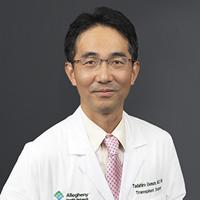
Transplant Surgeon

Transplant Hepatologist
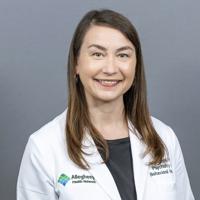
Transplant Psychologist
Nicole Schneiders, PharmD
Gretchen Krajcovic, PharmD
To become a living liver donor, you need to:
We'll complete a comprehensive exam, including blood work, liver function tests, urine studies, imaging, and a multidisciplinary evaluation, to determine your eligibility for donation. If you meet the liver donation requirements, our team will be by your side through the entire process. Our comprehensive follow-up care involves monitoring your health in the weeks and months following your surgery.
Living liver donation greatly reduces the amount of time a patient needs to wait for a transplant, which often allows them to get a lifesaving liver sooner.
You can donate up to 70% (around two-thirds) of your liver. The liver has the ability to grow back, and both your liver and your recipient's liver grow back to full size within about six months.
The liver donor evaluation is covered by the recipient's insurance. As the donor, you'll be responsible for routine health and cancer screenings. Our social worker will review any available resources, including wage reimbursement programs and Donor Shield protections, to support you throughout the process if needed.
Donors can be family members, friends, coworkers, or even anonymous (non-directed) who choose to help someone in need. However, the donor and recipient must have a compatible blood type for a successful transplant.
Living liver donation is a well-established procedure and donor safety is our highest priority. Most donors recover fully from surgery and go on to live normal, healthy lives.
The surgery usually lasts six to seven hours. The surgeon will make an incision below your rib cage to perform the surgery. Then, the surgeon will carefully separate and remove the part of your liver (usually the right side) that you're donating. After the surgery, you'll spend four or five nights in the hospital.
From the time you leave the hospital until your surgeon checks your incision around two weeks after surgery, you won't be able to drive. For 8 to 10 weeks after surgery, you won't be able to lift more than 10 pounds. You may feel tired for the first two weeks after surgery and will need to rest. We encourage you to be lightly active between resting periods by getting up and walking around. By three months after surgery, you'll be able to return to your normal physical activities.
You will have a postoperative appointment with your surgeon within two weeks after surgery. During this appointment, your surgeon will check your incision to make sure it's healing well. During the first few weeks, you'll have several blood work appointments. Six months after surgery, you'll have an in-person appointment for a CT scan, where your care team will look at your liver to see how it's growing back. You'll also have telehealth appointments one year and two years after your surgery. After two years, you'll return to having annual physicals with your primary care provider (PCP).
If you are interested in living liver donation or know someone you would like to help through living liver donor surgery, complete the initial screening. If you have any questions, contact the AHN Living Liver Donor Program coordinators by calling 412-359-4441 or 412-359-8119.
To register to be an organ donor, visit Donate Life America.